Proven space-grade reliability
Validated through signals from TASA’s Formosat-5 and NASA’s Landsat-8/9

Validated through signals from TASA’s Formosat-5 and NASA’s Landsat-8/9
Validated through signals from TASA’s Formosat-5 and NASA’s Landsat-8/9
YTTEK’s SATCOM Solutions are purpose-built for next-generation Low Earth Orbit (LEO) satellite communications. With a proven track record validated by Taiwan Space Agency (TASA)’s Formasat-5 mission, our SDR-based systems deliver ultra-fast, secure, and stable signal reception across a wide frequency spectrum. From on-orbit data collection to ground-based analysis, YTTEK empowers satellite developers and researchers with high-performance, risk-free technology designed to meet the demands of modern space missions.

Complete hardware and software development for full control and flexibility.

Receive and decode real satellite signals with high reliability.

Timely technical support ensuring mission assurance.

Supports Satcom integration and validation comprehensively.

Validated through long-duration real-signal reception from LEO missions.
Trusted by Taiwan Space Agency (TASA), HyperSDR successfully received and decoded signals from TASA’s Formosat-5 and processed signals from the NASA’s Landsat-8 and Landsat-9. Its field-proven performance makes it the reliable choice for mission-critical satellite communications.

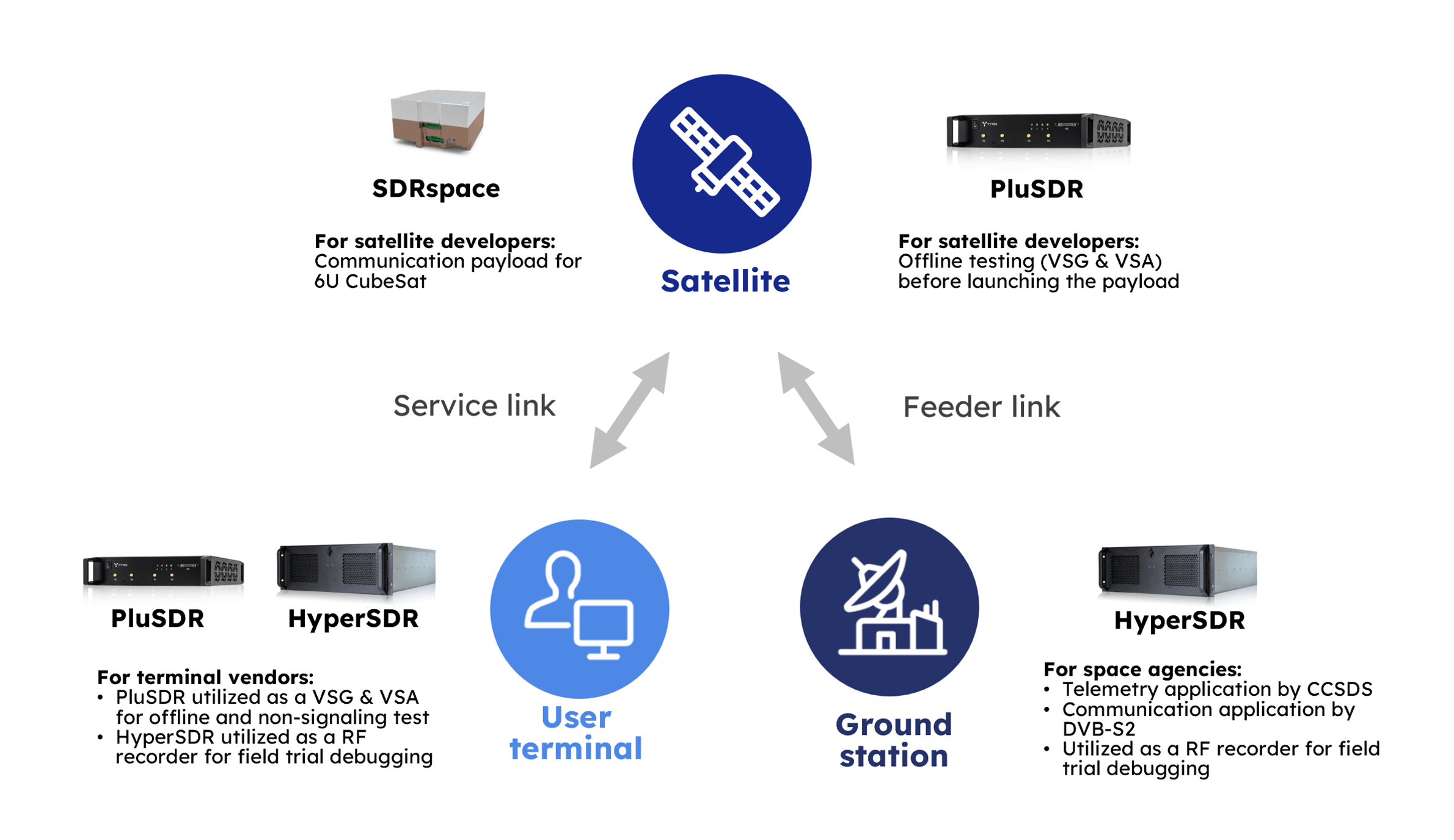
What standards does the YTTEK HyperSDR satellite ground station modem support?
The YTTEK HyperSDR satellite ground station modem has been validated by Taiwan Space Agency (TASA), successfully receiving and decoding high-speed downlink signals at ground stations from the following remote sensing satellites:
Taiwan TASA: FORMOSAT-5 and FORMOSAT-8A
USA NASA: Landsat-8 and Landsat-9
The X-band imagery data downlinks of these large Earth observation satellites all comply with the strict CCSDS standard. This demonstrates that HyperSDR fully supports QPSK/OQPSK modulation under the CCSDS specification, as well as complex frame synchronization and forward error correction coding (such as Reed-Solomon and Viterbi).
Furthermore, full compatibility with the ETSI EN 302 307-1 DVB-S2 waveform standard will be officially supported by the end of 2026, empowering our partners with broader flexibility for satellite communication.
What frequency bands and bandwidth does the YTTEK HyperSDR satellite ground station modem support?
By leveraging highly integrated Software-Defined Radio (SDR) technology, the YTTEK HyperSDR combines RF front-end and baseband modem functionalities into a single, unified unit. It natively supports X-band and Ku-band satellite communication for both transmit and receive, eliminating the need for bulky and complex external up/down converters.
Frequency tuning range: 10 MHz to 15 GHz (ultra-wideband RF architecture)
Instantaneous bandwidth (IBW): Up to 400 MHz, fully capable of processing high-speed data downlinks.
What is the receive throughput of the YTTEK HyperSDR satellite ground station modem?
The YTTEK HyperSDR satellite ground station modem delivers exceptional throughput performance, purpose-built to handle the massive data downlink demands of next-generation LEO/MEO satellites. Detailed throughput specifications of HyperSDR are as follows:
Maximum throughput per channel: Up to 2.25 Gbps
Number of RF channels: Equipped with 2 independent RF transceiver channels
Maximum baud rate: Each channel supports demodulation of up to 375 Msps
What other unique features does the YTTEK HyperSDR satellite ground station modem offer?
The YTTEK HyperSDR satellite ground station modem stands out through four key differentiators:
1. “All-in-one” integration: eliminating complex up/down converters
Traditional high-speed satellite ground stations are typically bulky and architecturally complex. When receiving X-band or Ku-band signals, the signal must pass through an external Low-Noise Block downconverter (LNB) and then rely on an additional external downconverter to bring the high-frequency signal down to Intermediate Frequency (IF) before it can be sent to the modem for demodulation. Through advanced Software-Defined Radio (SDR) technology, HyperSDR seamlessly integrates the RF front-end and modem baseband processing into a single platform. This significantly simplifies the ground station’s system architecture, reducing deployment costs and equipment failure rates while greatly enhancing mobility.
2. Commercial-grade equipment with a “national-level” field-proven track record
Many commercial SDR devices have only been tested against simulated signals in a lab environment. HyperSDR, by contrast, has already been proven through real-world interfacing with satellites in orbit. It has been validated by Taiwan Space Agency (TASA), successfully tracking and decoding high-speed X-band imagery downlink signals in real ground station environments from major remote sensing satellites, including TASA’s FORMOSAT-5 and FORMOSAT-8A, as well as NASA’s Landsat-8 and Landsat-9. This demonstrates that HyperSDR maintains stable operation even when facing complex and harsh real-world space signal challenges — including Doppler shift, signal fading, and extremely low signal-to-noise ratio (SNR) — showcasing “space-grade” operational reception performance.
3. Multi-channel and high-resolution synchronous processing
Two independent RF channels: HyperSDR is equipped with two independent RF transceiver channels. This enables spatial diversity or Multiple-Input Multiple-Output (MIMO) configurations to further enhance receive sensitivity and anti-interference performance, or allows simultaneous tracking/reception of signals from two different satellites.
High-resolution signal conversion: HyperSDR also incorporates a 14-bit Analog-to-Digital Converter (ADC), ensuring extremely high dynamic range and resolution when converting weak satellite RF signals — allowing faint signals buried in background noise to be precisely extracted.
4. Highly software-defined for future-proof flexibility
HyperSDR is built on a software-defined radio architecture. When facing future 6G satellite communications or new telemetry missions that adopt different communication protocols, there is no need to replace the hardware. Simply by updating the software/firmware to load new waveforms or Field-Programmable Gate Array (FPGA) logic, HyperSDR can immediately support new communication standards — greatly extending the platform’s service life and reducing operators’ transition costs.
What is the Technology Readiness Level (TRL) of the YTTEK SDRspace satellite communication payload? Has it secured flight heritage?
The YTTEK SDRspace is a fully integrated satellite communication payload designed for CubeSats and LEO satellites, supporting dual X/Ku-band operations with data rates up to 720 Mbps. Currently, it has successfully completed ground-based space environment simulation testing and system prototype demonstration under actual operating conditions, meeting the conditions for TRL 7 (system prototype demonstrated in an operational environment).
Flight heritage roadmap
SDRspace is scheduled to be launched aboard a satellite in 2027. Upon successful orbit insertion and the completion of end-to-end space communication links and dynamic reconfiguration testing of Software-Defined Radio (SDR), SDRspace will officially secure flight heritage, advancing its maturity level to TRL 8 (actual system completed and “flight qualified” through test and demonstration), and ultimately progressing toward TRL 9, the standard for commercial operations.
What frequency bands does the YTTEK SDRspace satellite communication payload support? What are the uplink and downlink frequencies, and what is the bandwidth?
The YTTEK SDRspace satellite communication payload supports both X-band and Ku-band frequencies. The detailed RF specifications are as follows:
Uplink frequency:
• 14.0 GHz – 14.5 GHz (Ku-band)
Downlink frequencies:
• 8.0 GHz – 8.4 GHz (X-band), or
• 10.7 GHz – 12.7 GHz (Ku-band)
Transmit/Receive (TX/RX) bandwidth:
• 200 MHz
What communication standards does the YTTEK SDRspace satellite communication payload support?
The YTTEK SDRspace satellite communication payload currently supports the following communication standards:
• NASA CCSDS
• DVB-S2
What are the dimensions and weight of the YTTEK SDRspace satellite communication payload?
The YTTEK SDRspace satellite communication payload is highly compact and lightweight. Detailed specifications are as follows:
Dimensions: 100 mm × 87.4 mm × 52.01 mm (Total volume is less than a standard 1U CubeSat)
Weight: Less than 1,800 g
Will the YTTEK SDRspace satellite communication payload support the 3GPP NTN standard in the future?
Yes. As a Software-Defined Radio (SDR)-based satellite communication payload, the YTTEK SDRspace inherently offers high flexibility. YTTEK is planning collaborations with strategic partners, aiming to support 3GPP NTN standards and future evolutionary releases within the current hardware architecture.
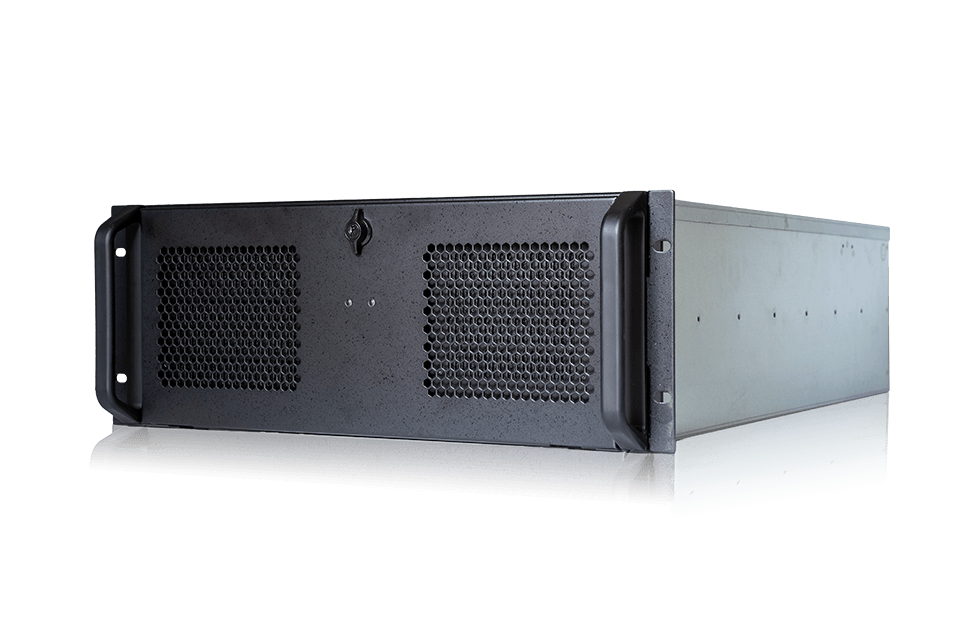
• Proven success in real-world space missions
• Ultra-wide frequency support up to 15 GHz, covering X and Ku bands
• Ultra-fast 2.25 Gbps throughput per channel
• 500 Msps RF recording for in-depth signal analysis
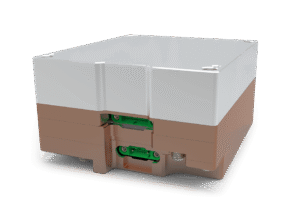
• 5 W max TX power delivers strong, long-range satellite connectivity
• Selectable TX frequencies (X & Ku bands)
• 720 Mbps/160 Mbps high-speed data rate for TX/RX supports real-time, data-heavy missions
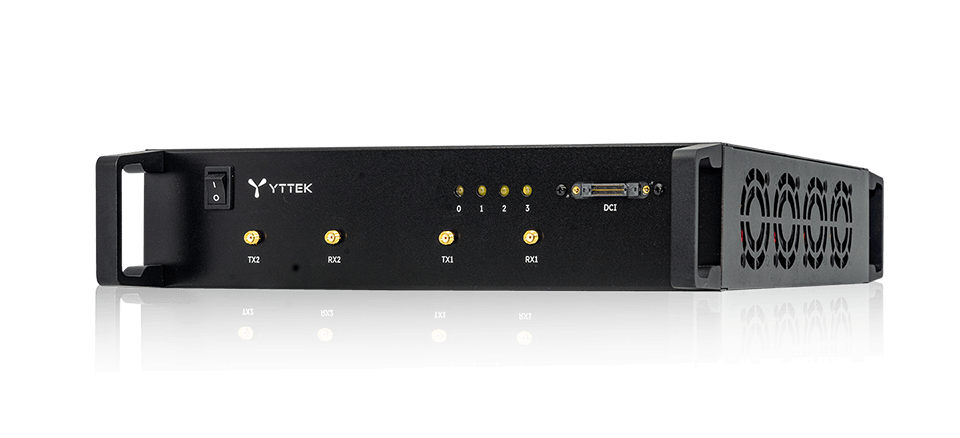
• Covers frequencies from 10 MHz to 15 GHz
• Up to 400 MHz bandwidth
• Intuitive, free example code included
• Applicable to multiple wireless communication standards